Headache and Migraine Triggers: How Chiropractic Treatment Can Address Underlying Causes
If you've ever been stopped in your tracks by a pounding headache or a migraine that sent you retreating to a dark, quiet room, you already know how completely these episodes can derail your day. For many people here in Sarasota, headaches aren't just an occasional inconvenience — they're a recurring disruption that affects work, family time, sleep, and the active lifestyle so many of us moved here to enjoy. What most people don't realize is that a significant number of headaches, particularly those related to tension and cervicogenic (neck-related) origins, have underlying physical causes that chiropractic care is well-suited to address.
What is a cervicogenic or tension-related headache?
A cervicogenic headache is one that originates from dysfunction in the cervical spine — the bones, joints, muscles, and nerves of your neck. Tension headaches arise from sustained muscle tightness, often in the neck, shoulders, and upper back. Both types are closely tied to spinal mechanics, posture, and musculoskeletal imbalances that a chiropractor can evaluate and work to correct.
- What Triggers Headaches and Migraines?
- The Spine-Headache Connection Most People Miss
- How Chiropractic Care Addresses Underlying Causes
- Practical Tips to Reduce Headache Frequency
- When to See a Chiropractor for Headaches
- Myths vs. Facts About Chiropractic and Headaches
- Final Thoughts from Our Team in Sarasota
What Triggers Headaches and Migraines?
Headaches and migraines are rarely caused by a single factor. They tend to develop when multiple triggers stack on top of one another until your body reaches a breaking point. Understanding those triggers is the first step toward breaking the cycle — and that's something we spend a lot of time discussing with patients at Sarasota Chiropractic And Physical Therapy.
Some of the most common headache and migraine triggers include prolonged poor posture, particularly the forward head position many of us adopt while working at a desk or scrolling on a phone. Physical tension in the neck and upper trapezius muscles can directly refer pain into the skull, creating what feels like a headache originating in the head when it actually starts much lower. Stress, dehydration, irregular sleep, and hormonal fluctuations can also lower the threshold at which a headache begins.
For auto accident patients — a population we see frequently here in Sarasota — whiplash injuries are a particularly significant trigger. The rapid back-and-forth motion of a car collision can strain the muscles, ligaments, and joints of the cervical spine, leaving behind inflammation and restricted movement that becomes a steady source of ongoing headaches, sometimes lasting weeks or months after the accident itself. These are not just "stress headaches." They are a physiological response to injury, and they deserve a real, structured plan — not just over-the-counter pain relievers and a recommendation to wait it out.
The Spine-Headache Connection Most People Miss
Your cervical spine — the seven vertebrae that make up your neck — does far more than hold your head up. It houses and protects the spinal cord, provides passageways for nerve roots that extend into your head, face, and shoulders, and supports the complex interplay of muscles that control movement in multiple directions. When any part of that system is out of alignment, under strain, or restricted in its motion, the ripple effects can be significant.
Joints in the upper cervical spine, particularly at the C1-C2 and C2-C3 levels, have well-established referral patterns that produce pain felt in the back of the skull, behind the eyes, and across the temples. This is the biomechanical basis of cervicogenic headaches, and it's one reason why many patients are surprised to find that neck treatment reduces the frequency and intensity of their head pain.
Muscle tension plays an equally important role. When the suboccipital muscles — the small but powerful group at the base of your skull — stay contracted for extended periods due to poor posture, sustained stress, or injury, they compress nerves and restrict blood flow in ways that contribute directly to headache onset. Dr. Abraham Kozma evaluates this entire system when a patient presents with recurring headaches, looking not just at where it hurts, but at what's driving the dysfunction upstream.
Poor thoracic mobility — stiffness in the mid-back — also forces the neck to compensate and work harder, contributing to the kind of cumulative strain that keeps headache sufferers in a frustrating loop. This is exactly why integrated care that addresses the spine as a whole system tends to produce more meaningful results than isolated treatments targeting only the symptom.
How Chiropractic Care Addresses Underlying Causes
At Sarasota Chiropractic And Physical Therapy, chiropractic care for headaches isn't a one-size-fits-all adjustment and you're out the door. Dr. Abraham Kozma takes a whole-body, functional approach — evaluating your posture, spinal alignment, cervical range of motion, and muscle function to identify where the breakdown is happening before building an individualized plan.
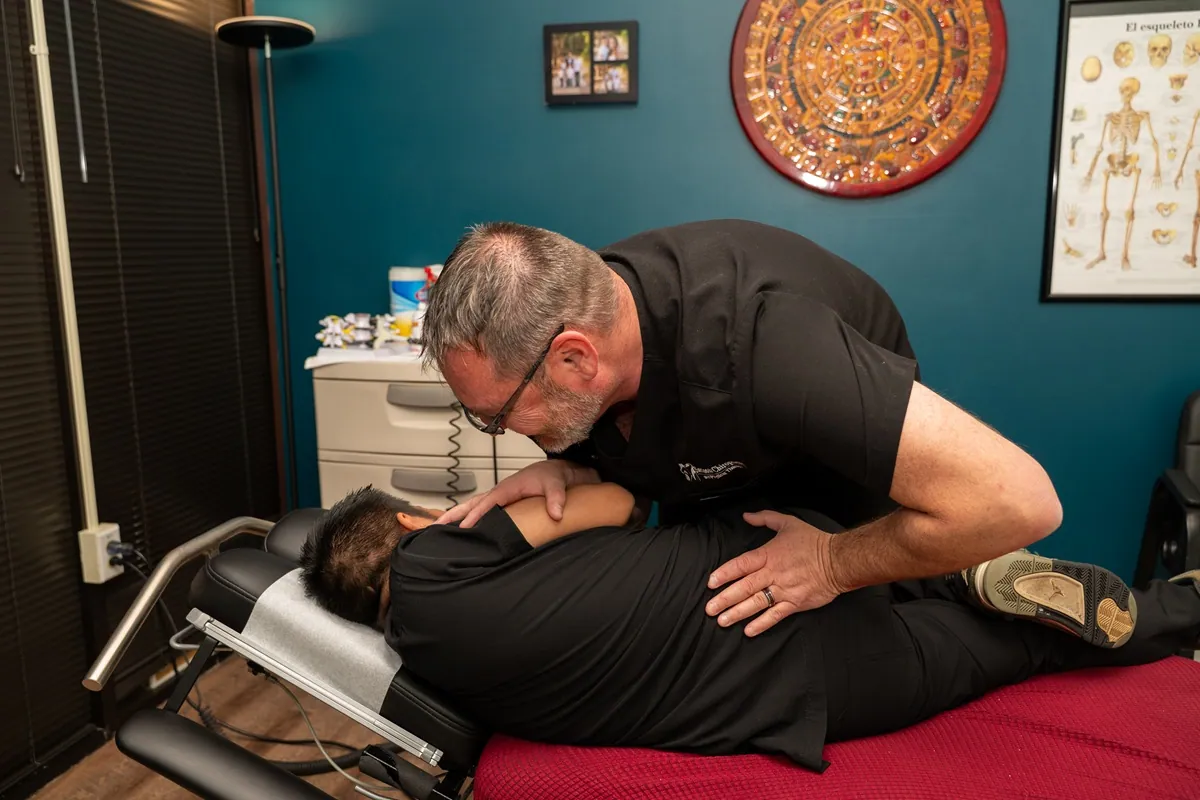
Spinal manipulation of the cervical and thoracic spine is one of the primary tools in that plan. Research published through the American Chiropractic Association and reviewed by organizations such as the National Center for Complementary and Integrative Health (NCCIH) suggests that spinal manipulation may be effective in reducing the frequency and intensity of tension-type headaches and cervicogenic headaches. The goal of a chiropractic adjustment in this context is to restore proper joint motion, reduce nerve irritation, and relieve the muscular tension that feeds the headache cycle.
But what genuinely sets our practice apart from many others in the Sarasota area is the integration of physical therapy alongside chiropractic care. Chiropractic adjustments address the structural component — the alignment and motion of your joints. Physical therapy addresses the functional component — the strength, flexibility, and movement patterns that keep those joints stable and properly supported. Together, they work on both sides of the same problem. Many patients who have tried chiropractic alone and experienced limited long-term results find that this dual-discipline model produces the kind of durable improvement they were looking for.
For patients recovering from auto accidents, this integrated approach is especially important. Whiplash-related headaches often involve a combination of joint dysfunction, ligamentous injury, and muscular imbalance that requires both manual correction and rehabilitative exercise to fully address. Working with Dr. Abraham Kozma means you're getting one-on-one attention — not a quick cracking session and a handoff to a technician — at every single visit.
Practical Tips to Reduce Headache Frequency
While professional care is essential for addressing underlying structural causes, there are meaningful steps you can take at home to reduce the frequency and severity of your headaches. These are not substitutes for a proper evaluation, but they can be valuable parts of your overall recovery and wellness routine.
Posture awareness is one of the most impactful places to start. If you work at a desk, make sure your screen is at eye level so your head isn't tilting downward throughout the day. That forward head position adds significant strain to the cervical spine — for every inch your head moves forward from neutral, the effective load on your neck increases substantially. Small adjustments to your workspace can make a real difference over time.
Hydration is another underappreciated factor. Dehydration is a recognized headache trigger, and many of us in the Florida heat simply aren't drinking enough water throughout the day. Keeping a water bottle visible and within reach at your desk is an easy behavioral nudge that can help.
Gentle neck mobility work — slow, controlled range-of-motion movements rather than aggressive stretching — can help reduce the muscular tension that contributes to headache onset. Dr. Abraham Kozma can walk you through specific movements appropriate for your condition and stage of recovery, particularly important if you're dealing with post-accident stiffness or an active injury.
Sleep position also matters more than most people realize. Sleeping on your stomach forces your neck into prolonged rotation, which can aggravate cervical joint dysfunction and contribute to morning headaches. Side or back sleeping with appropriate cervical support is generally more favorable for neck health.
When to See a Chiropractor for Headaches
It's worth seeing a chiropractor if your headaches are recurring — meaning they happen more than once or twice a month — or if they consistently follow a pattern of neck stiffness, shoulder tension, or specific postures and activities. If your headaches began or significantly worsened after a car accident, that is a strong signal that there is a structural component driving them, and conservative care with an experienced provider is an appropriate and important first step.
Patients who have been relying on over-the-counter pain medication to manage frequent headaches should also consider a professional evaluation. Medication overuse headache — sometimes called rebound headache — is a recognized phenomenon where frequent use of pain relievers actually increases headache frequency over time. Getting to the root cause rather than managing symptoms repeatedly is a more sustainable path forward.
There are also certain headache presentations that warrant prompt medical attention rather than conservative care. These include a sudden, severe headache described as "the worst headache of your life," headaches accompanied by fever, stiff neck, confusion, vision changes, or neurological symptoms such as weakness or numbness on one side of the body. These patterns can indicate a medical emergency and require evaluation by a physician or emergency department immediately. At Sarasota Chiropractic And Physical Therapy, we always screen patients carefully and refer out when appropriate — your safety is the priority above all else.
| Headache Type | Common Triggers | Chiropractic Relevance |
|---|---|---|
| Tension Headache | Poor posture, muscle tension, stress, prolonged screen time | High — directly tied to cervical and thoracic dysfunction |
| Cervicogenic Headache | Neck joint dysfunction, restricted cervical motion, whiplash injury | Very High — originates from spinal structures chiropractors treat |
| Migraine | Hormonal changes, sensory triggers, sleep disruption, stress | Moderate — evidence suggests spinal care may help reduce frequency |
| Post-Traumatic Headache | Auto accident, head or neck injury, whiplash | High — structural injury requires hands-on rehabilitative care |
Myths vs. Facts About Chiropractic and Headaches
Myth: Chiropractic care is only for back pain.
Fact: While back pain is one of the most common reasons people seek chiropractic care, the scope of musculoskeletal treatment extends well beyond the lower back. Neck pain, joint dysfunction, and headaches — particularly those with cervical origins — are well within the professional scope of chiropractic practice, and evidence supports its use for these conditions.
Myth: If a headache is in your head, the problem must be in your head.
Fact: Pain referral is a well-documented physiological phenomenon. Joints and muscles in the neck have established patterns of referring pain into the head and face, meaning the sensation of a headache can originate from structures well below the skull. This is precisely what makes cervicogenic headaches so commonly misunderstood and undertreated.
Myth: You need to take pain medication every time a headache starts.
Fact: Over-the-counter pain medications provide temporary symptom relief but do nothing to address the underlying structural causes of recurring headaches. Frequent reliance on these medications can actually increase headache frequency over time — a phenomenon recognized in both neurology and primary care literature as medication overuse headache.
Myth: Chiropractic adjustments to the neck are dangerous.
Fact: Cervical manipulation performed by a licensed, trained chiropractor is considered a generally safe intervention when patient history and examination have been appropriately conducted. As with any healthcare procedure, risks exist and are discussed openly with each patient. The team at Sarasota Chiropractic And Physical Therapy conducts thorough evaluations before any treatment is performed.
Myth: Chiropractic care cures migraines.
Fact: No conservative or medical treatment cures migraines outright. Research does suggest that chiropractic care may help reduce the frequency and intensity of migraines in some patients, but results vary. The goal of care is meaningful improvement in function and quality of life — honest, realistic expectations are part of every conversation Dr. Abraham Kozma has with his patients.
Final Thoughts from Our Team in Sarasota
Recurring headaches don't have to be your normal. Here in Sarasota, so much of what makes life worth living — the beach, the golf courses, time with family, an active social life — becomes difficult or impossible to fully enjoy when you're dealing with pain that follows you everywhere. The frustrating part is that so many people endure this for months or years without ever getting to the actual cause.
At Sarasota Chiropractic And Physical Therapy, Dr. Abraham Kozma and the entire care team are committed to looking past the symptom and finding what's driving it. Whether your headaches began after a car accident, gradually developed from years of desk work, or have been a part of your life for as long as you can remember, you deserve more than a temporary patch. You deserve a real plan.
If you're in the Sarasota area and your headaches are interfering with your daily life, we'd love to sit down with you, understand your history, and talk through what may actually be going on. Call to schedule your appointment — and let's get you moving in the right direction.
Frequently Asked Questions
Can a chiropractor help with migraines, or only tension headaches?
Chiropractic care may be beneficial for both. The evidence base is strongest for tension-type and cervicogenic headaches, but research suggests that some migraine sufferers also experience reduced frequency and intensity of episodes with spinal care. Every patient is different, and a thorough evaluation helps determine whether chiropractic care is an appropriate part of your plan.
How many chiropractic visits does it typically take to see improvement in headaches?
There is no universal timeline, as improvement depends on the type, severity, and duration of your headaches, as well as any underlying injury or structural issue. Many patients begin noticing changes within the first few weeks of consistent care, though a complete evaluation is needed to give a more personalized picture of what to expect.
Are headaches after a car accident normal, and should I see a chiropractor?
Post-traumatic headaches are common after car accidents, particularly those involving whiplash. They are your body's response to injury — not something to dismiss or simply wait out. Seeing a chiropractor experienced in auto injury recovery is a well-supported first step in identifying the structural cause and beginning a focused recovery plan.
Will I need to keep coming back forever?
The goal of care at Sarasota Chiropractic And Physical Therapy is not indefinite dependency — it's real recovery. Treatment plans are structured around reaching your goals, and many patients find that combining chiropractic care with physical therapy rehabilitation produces lasting results that reduce the need for ongoing maintenance visits.
Can poor posture really cause headaches?
Yes. Forward head posture and prolonged muscle tension in the neck and upper back are recognized contributors to both tension and cervicogenic headaches. Addressing posture as part of a comprehensive treatment plan — including both hands-on care and rehabilitative exercise — is an important element of reducing headache recurrence.
Is it safe to get a chiropractic adjustment while I have an active headache?
In many cases, yes — but it depends entirely on the type of headache and your individual health history. Some patients experience relief during or after treatment. Dr. Abraham Kozma evaluates each patient carefully before any hands-on care is performed, and your comfort and safety guide every decision made during treatment.
TL;DR — Key Takeaways
- Many recurring headaches, especially tension and cervicogenic types, are rooted in cervical spine dysfunction, poor posture, and muscular imbalance — all areas that chiropractic care directly addresses.
- Whiplash and other auto accident injuries are a common and often underrecognized cause of ongoing headaches that benefit from structured, hands-on rehabilitative care rather than rest and medication alone.
- Integrated chiropractic and physical therapy — as offered at Sarasota Chiropractic And Physical Therapy — targets both the structural and functional drivers of headaches for more complete, lasting results.
- Certain headache patterns are red flags for medical emergencies and should be evaluated by a physician immediately — a qualified chiropractor will recognize and refer these appropriately.
- If headaches are disrupting your life in Sarasota, a professional evaluation with Dr. Abraham Kozma is the right first step toward understanding what's causing them and what can actually be done about it.

Dr. Abraham Kozma
Dr. Abe Kozma is a licensed chiropractor serving the Sarasota, FL community. He is a graduate of Life University in Marietta, GA.